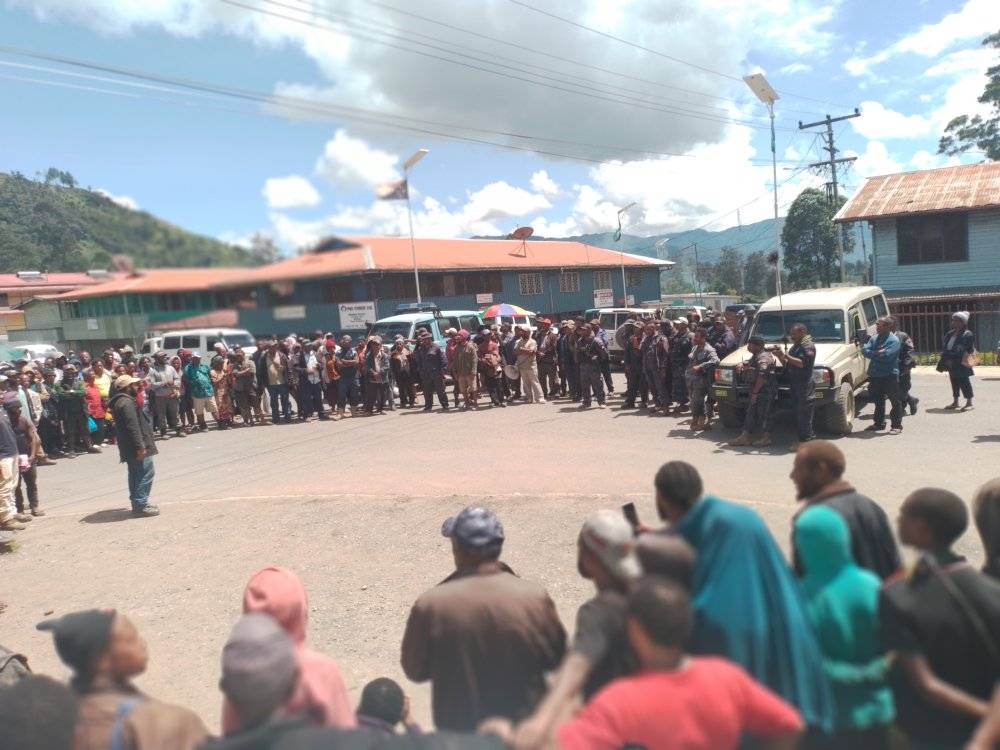
 Public Servants in Enga Protest after Government pay deducation. [Photo by Richard Pambai Lyaahh] Public Servants in Enga Protest after Government pay deducation. [Photo by Richard Pambai Lyaahh] By Ruben PULI
Amidst a grave situation in Papua New Guinea (PNG), citizens are making an unprecedented plea to the Australian Government, seeking assistance through the establishment of a caretaker government. The current state of affairs in PNG is dire, characterized by significant financial woes that have burdened an already impoverished population and low-income public servants with hefty taxes. Commentary by Samson Komati
In PNG political parties have become mere stepping stones for politicians to commoditise their mandated positions for love of money than defending national and peoples interests. It seems politicians are not worried about any of the biggest problems and challenges affecting PNG these days because PSIP and DSIP totalling whopping K20 Million per seat for 118 MPs is significantly important than opening the can of worms against their own government (hands that feed them). The Opposition of PNG has gone cold silent and we don’t know to this day who are the Shadow Ministers in the Opposition and have yet to see any of these Shadow Ministers, if they ever exist, come out and speak for the people and economy of PNG against the Government and offer alternative policies to bail PNG out of the economic and social problems. Opposition MPs are supporting Government in attending some events organised by Government like recent launch of MTDP 4 at APEC Haus Port Moresby a few weeks ago. By Noel Anjo
The so called Papua New Guinea's Leadership Code Act is an escape route for corrupt leaders to misuse and steal public funds and escape punishment or imprisonment. Recently Marape Rosso government made few amendments to the Penalty Act, increasing court fine from K500 to K5000 and K1000 to K10 000 and 3years to 5years of dismissal from office. The recently amended above penalties are not enough to stop corruption from the top level. There were no amendments made to sentence corrupt leaders to prison for corruption and stealing public funds. Therefore I appeal to the Chief Justice, Chief Ombudsman Commissioner and Police Commissioner to recommend to the government and Parliament to amend the Leadership Code Act. More than Half of PNG Parliamentarians jet on lavish ride for a Rugby League Match in Australia28/9/2022
 #StopCorruptioninPNG
About 72 politicians and department heads visited Brisbane, Australia last weekend for the Prime Minister’s XIII rugby league match. The entourage was joined by Prime Minister James Marape and included 13 CEOs, heads of departments and is estimated to have cost over K3 million in airfares, transportation, hotel accommodation, tickets to Suncorp Stadium, allowances and incidentals. While Papua New Guinean’s watched the game live on TV back home, they were seen lapping it up at the Suncorp Stadium where the PNG team was thrashed by the Australians. 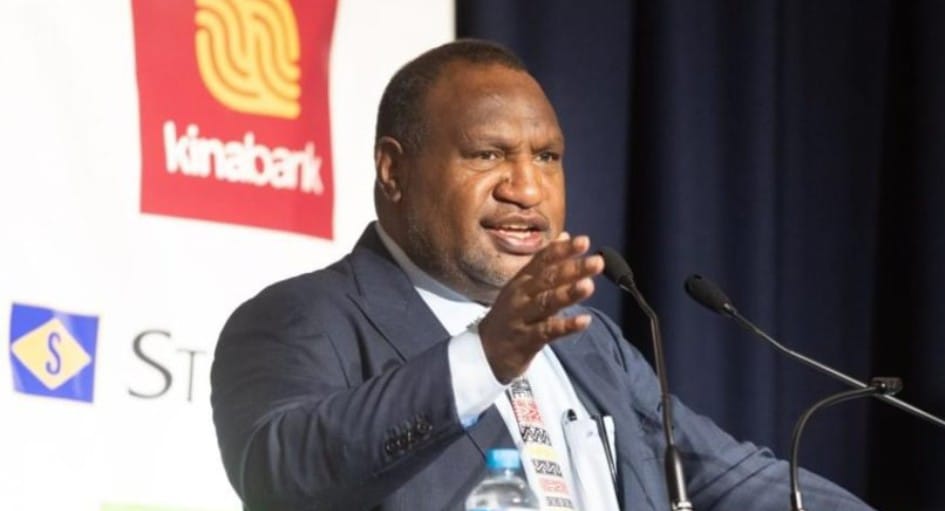 By Okuk Rogerson
"Prime Minister James Marape Won In A Very Funny PNG Democratic Style Election." So Prime Minister James Marape's electorate-Tari Pori , was first to vote in PNG followed by speed counting and declaration where he won by absolute majority in record time while rest of PNG is yet to vote , some voted with counting and declaration to be made within weeks and even months from now. This would never happen in true democracies around the world. No wonder PNG is ranked very high on world corruption perception index. Now that he won he has time on his side to consolidate his reckless and destructive team. FIVE people, including the son of Papua New Guinea Prime Minister James Marape, have been arrested and charged with money laundering in connection with the K1.3 million bust in Komo, Hela.
Police, acting on a tip-off on Saturday, accosted the five men carrying K1.3m cash. They were detained but released on Sunday night. Marape, who was in Hela to cast his vote during the one-day polling on Monday, said no one was above the law, including his family members. He said the police should be allowed to do their job. IN an election year, this may sound like a negative and harsh view of the current state of affairs in Papua New Guinea but sometimes we all need a collective wakeup call.
Many, if not all, of the nation’s problems are blamed largely on the decisions our leaders make – after all they are the ones who are steering the ship. But the responsibility is not entirely theirs because the people are the ones who put them there. No doubt for some, this maybe a tough spoonful of medicine to swallow but PNG is considered one of the most corrupt nations in the world today and sadly this is a fact we cannot escape from. We do not need a report or an international classification to tell use all is not well in PNG. By Petrus GAND
CORRUPTION has affected many of our [Papua New Guinea] universities over the years. Despite enrolling a good number of students on merit, corruption has found a way to thrive in the academic institutions. Corruption is found in almost every government institution. People pay public servants in exchange for favours and services. What is happening to PNG? The citizens' national pride is diminishing, causing the people to fail their duty to take ownership and act collectively in every walks of life for the growth of this nation. We are the key to driving the development of our country. LABELLING the corruption case as the worst of its kind, National Court Judge Theresa Berrigan jailed former National Capital District (NCD) election manager Terence Hetinu the maximum seven years with light labour on Friday.
Hetinu, 51, from Kainantu’s Biteve village in Eastern Highlands, corruptly received K184,300 from Michael Kandiu to influence the outcome of the election for the NCD seat in 2017 general election. Judge Berrigan said those entrusted with power and authority in public office, at any level of the public service, must be accountable to the people. “This was corruption of the worst kind, warranting the maximum penalty,” she said. “This case involved gross breach of trust. “It should never be forgotten that free and fair elections are the foundation upon which every thriving democracy rests, ensuring that government derives from the will of the people. PNG’s copy-paste constitution adopted from the British and Australians is still in its colonial form, wielding more powers to the rulers. Whatsoever the incumbent individuals prefer becomes the final solution. The PM’s post is typically occupied by a leading party in parliament, while the Ministry cabinets are shared among its affiliated party leaders under a common-understanding. So when the PM wants to ensure its demands are met, a direct call is made to the respective ministries to eventuate its missions. The PM remains the chairman to NEC and so calls the shots in every circumstance despite hindrances. The PM, through procedural-protocols, reserves the right to hire and fire whoever that is beneath the atmosphere of the government. This system has proceeded and facilitates the PM to be a systematic dictator. |
Corruption in Papua New Guinea
PNG Corruption WatchOn this page, all corruption practices are aired here. Please send in any information you think is/are deemed Corrupt practices. Your name will be withheld during publication. Email: pngfacts(at)gmail(dot)com |
- Home
- News
- Business News
- Economy News
- Sports News
- International News
- Corruption News
- Mining Watch
- Jobs
- Education News
- Scholarships
- Health News
- Bzzmart Online Shopping Platform
- Pacific
- Used Cars
- Buy or Rent Homes
-
Travel
- City of Port Moresby
- Adventure and Destination
- Hotels & Lodges in PNG
- Hotels & Lodges in Mendi, Southern Highlands Province
- Hotels & Lodges in Lorengau, Manus Province
- Hotels in Oro Province
- Hotels and Lodges in ESP
- Hotels & Lodges in Kavieng
- Hotels and lodges in Kimbe
- PNG Photo Gallery
- Map of Papua New Guinea
- PNG
-
Computer Tech
- Tech Help
-
Top Weebly designed Websites
>
- HOW TO RECOVER FILES WITH SHORT CUTS OR HIDDEN IN FLASH DRIVE OR EXTERNAL HARD DRIVE
- How to remove Stubborn Computer Virus
- Creating Login or Sign in Membership page in Weebly sites
- How to auto insert Table of Content in Word
- Top Weebly Website Examples and Portfolio
- Weebly Membership Sign in feature available
- Send Free SMS in PNG
- Radio Stations
- Television stations >
- PNG Information Directory
- Computer Resources
- Classifieds
- About us
- Contact Us
- Competition
- Advertisement
- Privacy Policy
- SP PNG Hunters News
- Weebly Forums
- National Football Stadium, Port Moresby
- Work Permits and VISAs in PNG : Guide
- Seasonal Workers Program for PNG
- List Your Business on PNGFacts.com
- Twodot Business Solutions
- Become a Sponsor
- Mt Giluwe Lodge
- Papua New Guinea Defence Force
- Political parties in PNG
- NID PNG
- Employment VISA in PNG
- Business VISA
- Visitor VISA
- Police Clearance in Solomon Islands
- PNG Electoral Commission
- PNG Election Results
 RSS Feed
|
Search Papua New Guinea Database >>
|
|
|
|
|
Home: PNG News :Travel : Government System: Computer Tech : About us: Contact : Disclaimer : Sitemap : Login Copyright & Disclaimer © 2012 -2024 PNG Facts: All rights reserved:
|
Website developed by Kilikalo Technology & Business Solutions Ltd
About |
Terms |
|