|
Choice Travel Ltd is located in Port Moresby, Papua New Guinea
Choice Travel Ltd Allotment 22, Section 496 Gordons Industrial Area P O Box 1614 Port Moresby, NCD Papua New Guinea Tel: 3238337/38/39  COMPANY OVERVIEW Bitmax PNG Travel Agency is a nationally owned Travel Agency, incorporated with Investment Promotion Authority (PNG) It is an International Air Transport Association (IATA) approved Travel Agency. We provide first class travel services to the general public. Bitmax PNG Travel Agency is a subsidiary of BITMAX PNG and organization based in Port Moresby with its branches across the 22 provinces of Papua New Guinea. TRAVEL & TOUR SERVICES Bitmax PNG Travel Agency provides effective and affordable travel services including;
• International and Domestic Ticketing • Passport, NID and Visa arrangement • Leave Fare Entitlements • Electronic Tickets • Hotel Accommodation World Wide • Travel Insurances • Hire Car Bookings • Tour Packages • Charters • Train & Coaches worldwide • Crypto Currency Visit Us at: Suite 12, Namona Bldg, Cameron Place, Gordons PO BOX 1380, BOROKO, NCD 111, Papua New Guinea Or Contact Us On: Phone: (675) 3250100 Fax: (675) 3250078) Mobile: (+675) 7244 9081 Email: wtopur@bitmaxpng.com.pg  By Julietta Jameson
EMPIRE BAY, CENTRAL COAST, NSW My grandparents lived on the Central Coast of NSW in a small community called Empire Bay. Their tidal waterfront home was a dream playground that I enjoyed with my brother Michael and cousins Rob, Chris and Vincent, who, like me, loved the freedom of this hidden boys’ paradise. This definitely contributed to my love of fishing, and adventure in the outdoors. NEW ZEALAND I was 14 when I was in a NSW schoolboy team that toured New Zealand, my first big trip overseas. We were billeted with families of the boys we would be playing against. Our welcome was friendly but once we got onto the field, these bigger Kiwi kids played hard. I toured three years in a row in my early teens to New Zealand. These experiences with new teammates and new friends matured me as a person. No doubt it set me on a path to play NRL football professionally. KANGAROO VALLEY, NSW Advertisement When not escaping to Empire Bay, my other love was to head down “the valley” to visit my Nan and Pop and cousins who lived on the NSW South Coast. Having grown up roaming the hills dodging black snakes and exploring the Kangaroo River, I still have a strong connection to the valley. It had a defining influence on me. LEEDS, NORTHERN ENGLAND At 20, I was contracted to play for the Leeds Rugby League Club for an off-season stint in England. I was about to learn how cold and hard a northern England winter could be. Back in 1986 all the English lads had regular jobs with rugby league the thing they did to earn a few pounds on the side. Many of my teammates worked underground. They would leave for work each day in the dark at 7am and return in the dark at 3pm – an existence that I couldn’t understand. They were a colourful bunch of hard-working middle class and they taught me many life lessons. PAPUA NEW GUINEA I was fortunate to experience Papua New Guinea in the mid-1980s. Since then I have visited this amazing country several times. The week was a memorable one, not so much for the fishing, as for the relationships we formed with these traditional people who invited us into their lives. Each afternoon on our return we would play volleyball. The fun and laughter was a highlight and the whole village would gather around to cheer their team on. We all had tears in our eyes as we departed their village at the end of the week knowing it was more than likely that we would never see each other again. Years later I was told that one of the couples named their little newborn boy ET. ET’s Ultimate Fishing Adventure by Andrew Ettingshausen (New Holland Publishers, $49.99) is out now. See newhollandpublishers.com Read more: http://www.traveller.com.au/the-places-that-made-me-former-nrl-player-and-tv-presenter-andrew-ettingshausen-h0bbfa#ixzz53GdhJAqW Follow us: @TravellerAU on Twitter | TravellerAU on Facebook 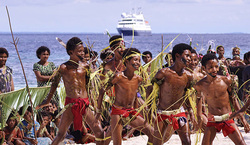 PNG Dancers: Credit :Fairfax NZ News LADIES AND gentlemen, if you would be so good as to take your wine glasses to the top deck, you will see a volcano erupting." The announcement from our captain, Jean-Pierre Ravanat, is barely finished before there's a stampede for the exits from the ship's restaurant.
It's a moonless night, and high above our heads a blade of red fire glows in the black sky. It's just possible to make out the silhouette of the cone as the volcano flares and dies, like a living, pulsing beast. A tongue of molten lava dribbles down its flanks until it disappears, swallowed in the dark of the sea. We're travelling along the north coast of Papua New Guinea on day three of our expeditionary voyage aboard the MV Orion. 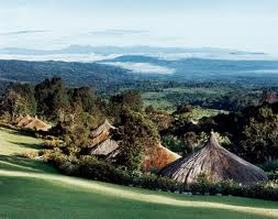 Papua New Guinea's dense rainforest hides poignant reminders of a brutal Second World War campaign, says Mark Stratton
Anthropologists adore Papua New Guinea. Most of this immense country remains blanketed by impenetrable tropical forests while its numerous indigenous tribes pursue rural subsistence lifestyles. Yet, running through much of the country, you find evidence of the Second World War – a conflict that remains exposed like an open wound. "Two years ago near my village, a B-26 bomber was found in the jungle with six dead American crewman," said Rodrick Vane, my trekking guide. "The airmen were still strapped into the plane and American officials came and took them away for burial more than 60 years after they'd died." I'd met Rodrick in Popondetta, the northern airport hub of the Kokoda Track – and the beginning of my journey through history. This year marks the 70th anniversary of fighting all along this route between Japanese and Australian soldiers. Having steamrollered through South-east Asia, the Japanese invaded northern Papua New Guinea in July 1942. They set off south along a jungle trail over the Owen Stanley Mountains of Kokoda towards the Australian-held capital, Port Moresby. 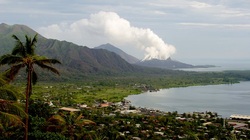 IN PAPUA New Guinea and the Solomon Islands, coral-ringed beaches, smouldering volcanoes and rainforest-covered mountains set the stage for unforgettable adventures.
* Exploring the landscape Test your mettle on a 10-day trek following the steps of Australian Diggers along the Kokoda Track, or climb Highland peaks for a glimpse of both sparkling coasts on a clear day. Prowl through jungle-clad scenery with village guides, en route to thundering waterfalls or in search of magnificently plumed birds of paradise.On the coast, hundreds of islands and atolls cry out for exploration. You can travel by slow-boat along pristine stretches of shoreline, staying overnight at peaceful villages. * The life aquatic The Solomon Islands and PNG are world-famous diving destinations, with excellent conditions most months of the year. Live-aboard boats and first-rate dive resorts provide access to sites far from the hordes. The waves are equally uncrowded for surf lovers, with fantastic reef, point and beach breaks scattered around the northern shores. There's also fantastic fishing, with yellowfin tuna, mackerel, sailfish and Papuan black bass in abundance. Click on the image below to go the Kokonda Tracking Authority Website 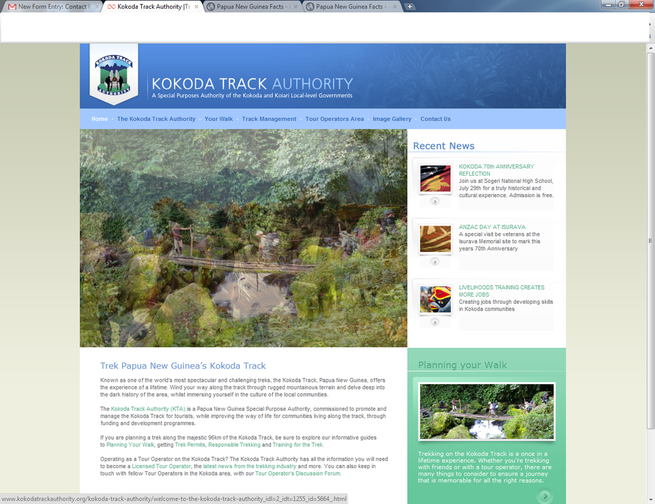 |
Papua New Guinea Travel TipsWrite something about yourself. No need to be fancy, just an overview. Categories
All
|

- Home
- News
- Business News
- Economy News
- Sports News
- International News
- Corruption News
- Mining Watch
- Jobs
- Education News
- Scholarships
- Health News
- Bzzmart Online Shopping Platform
- Pacific
- Used Cars
- Buy or Rent Homes
-
Travel
- City of Port Moresby
- Adventure and Destination
- Hotels & Lodges in PNG
- Hotels & Lodges in Mendi, Southern Highlands Province
- Hotels & Lodges in Lorengau, Manus Province
- Hotels in Oro Province
- Hotels and Lodges in ESP
- Hotels & Lodges in Kavieng
- Hotels and lodges in Kimbe
- PNG Photo Gallery
- Map of Papua New Guinea
- PNG
-
Computer Tech
- Tech Help
-
Top Weebly designed Websites
>
- HOW TO RECOVER FILES WITH SHORT CUTS OR HIDDEN IN FLASH DRIVE OR EXTERNAL HARD DRIVE
- How to remove Stubborn Computer Virus
- Creating Login or Sign in Membership page in Weebly sites
- How to auto insert Table of Content in Word
- Top Weebly Website Examples and Portfolio
- Weebly Membership Sign in feature available
- Send Free SMS in PNG
- Radio Stations
- Television stations >
- PNG Information Directory
- Computer Resources
- Classifieds
- About us
- Contact Us
- Competition
- Advertisement
- Privacy Policy
- SP PNG Hunters News
- Weebly Forums
- National Football Stadium, Port Moresby
- Work Permits and VISAs in PNG : Guide
- Seasonal Workers Program for PNG
- List Your Business on PNGFacts.com
- Twodot Business Solutions
- Become a Sponsor
- Mt Giluwe Lodge
- Papua New Guinea Defence Force
- Political parties in PNG
- NID PNG
- Employment VISA in PNG
- Business VISA
- Visitor VISA
- Police Clearance in Solomon Islands
- PNG Electoral Commission
- PNG Election Results
 RSS Feed
|
Search Papua New Guinea Database >>
|
|
|
|
|
Home: PNG News :Travel : Government System: Computer Tech : About us: Contact : Disclaimer : Sitemap : Login Copyright & Disclaimer © 2012 -2023 PNG Facts: All rights reserved:
|
Website developed by Kilikalo Technology & Business Solutions Ltd
About |
Terms |
|